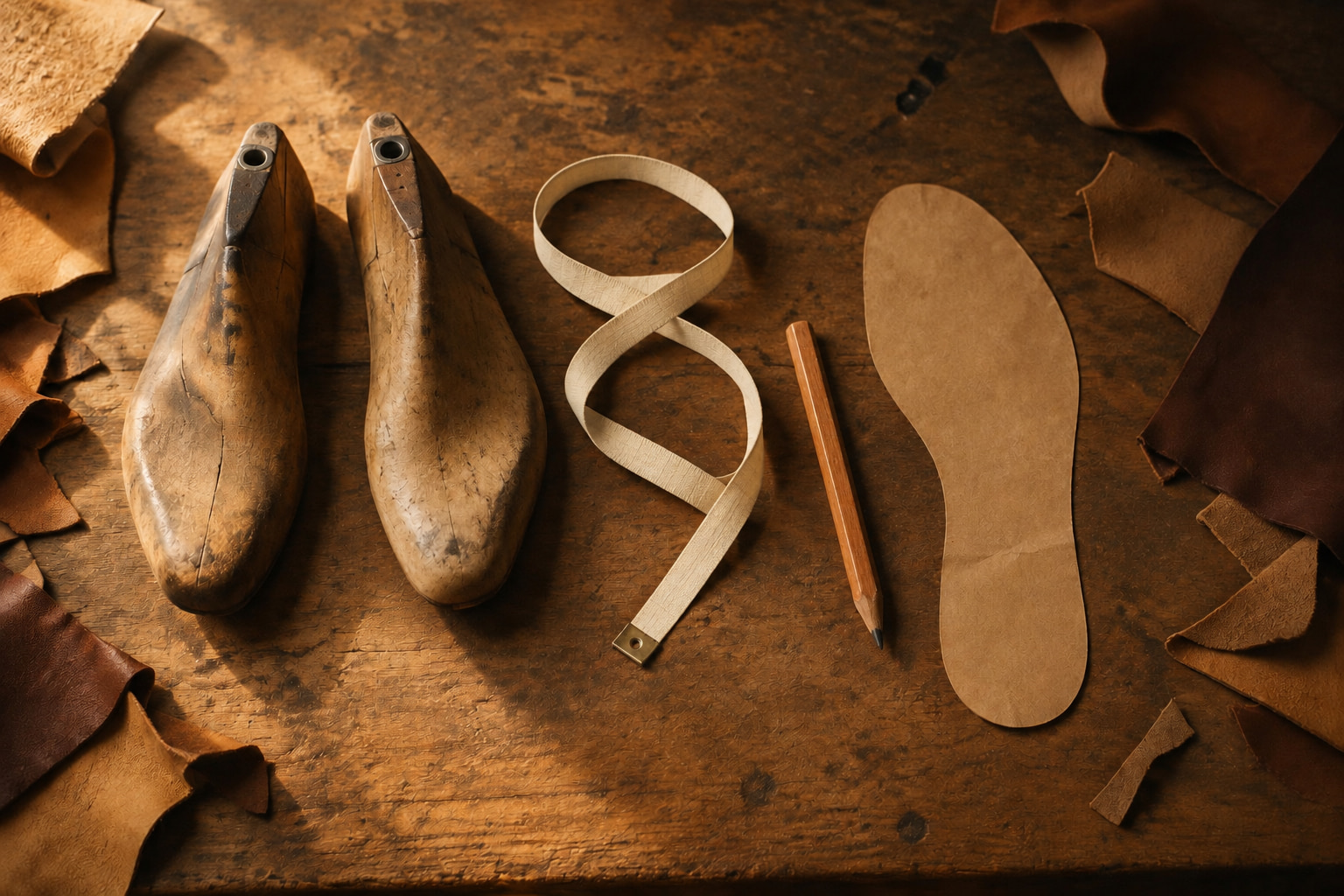
The fit is the whole reason to have a boot made.
Everything else about a boot is a preference. The fit is not. If it does not fit, the tooling, the leather and the toe shape do not matter — you will not wear them.
What I measure
Six numbers, taken by hand, on both feet.
This is not a brannock device at a shoe store. I measure you the way bootmakers have always done it, then I build a last to those numbers and work the leather over it.
- Length
- Heel to the longest toe, both feet, standing. Almost nobody is the same on both sides.
- Width
- Across the ball of the foot, where the boot actually carries your weight.
- Instep
- The height over the top of your foot. This is where most off-the-shelf boots bind.
- Arch
- Where your arch sits and how high it is, so the shank is placed under it, not beside it.
- Heel
- The width and shape of your heel, so the boot grips it instead of letting it ride up.
- Calf
- The height and girth of your leg, so the shaft is cut to sit right and not saw at you.
Made your way
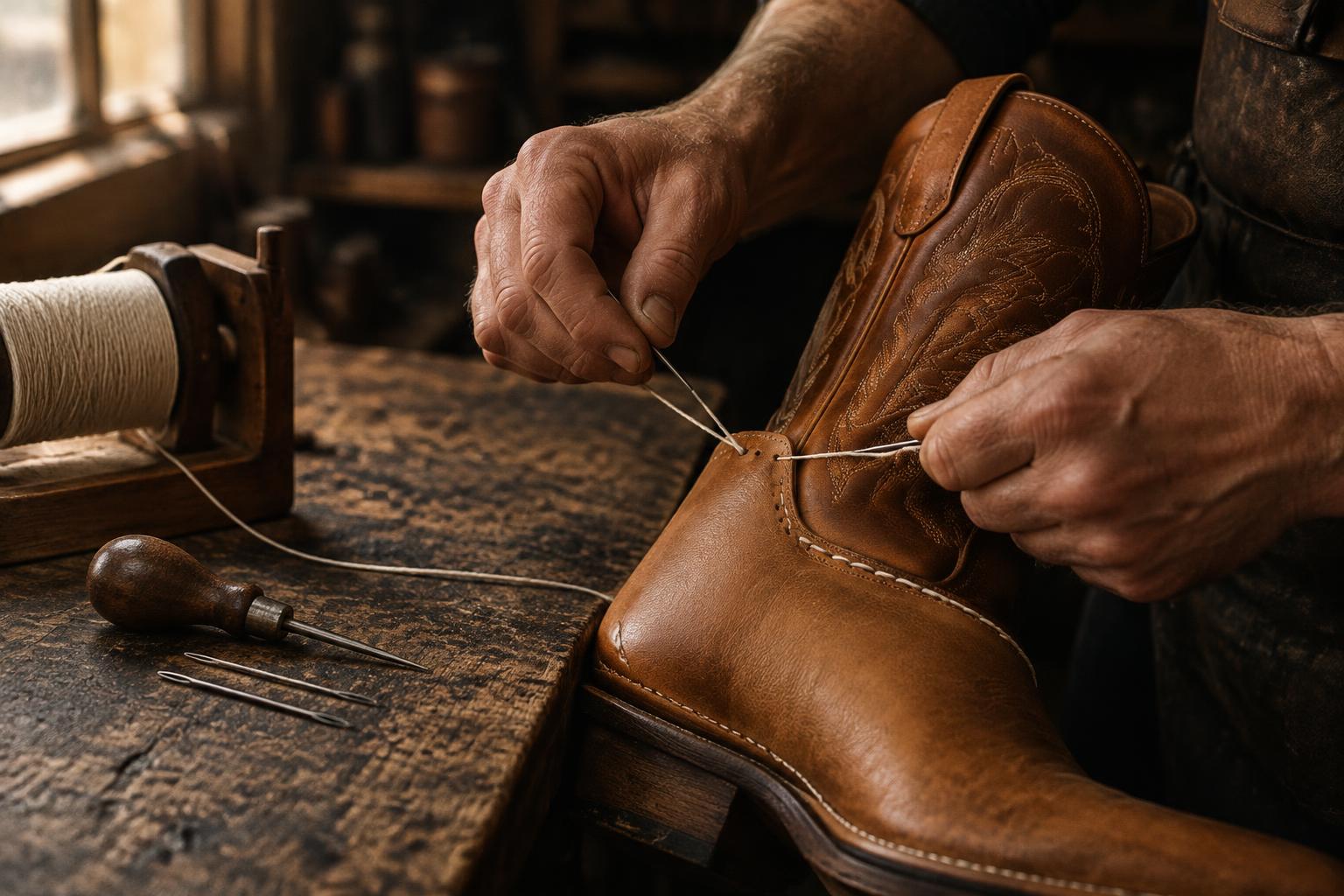
Then the boot gets built the way you always wanted it.
A good fit is not the finished conversation — it is the beginning of one. Once your last is right, we decide the rest together.
- The toe you want, from wide square to a sharp dress point.
- Heel height and shape, whether that is a working block or a tall dress heel.
- Leather — calfskin, cowhide, roughout, ostrich, and whatever else I can lay hands on.
- Stitching and tooling: plain and clean, a leaf stitch down the shaft, or full hand-tooled scrollwork.
- The small things: your initials on the pull strap, a contrasting welt, the lining.
My job is to tell you honestly what will wear well and what will not, and then build what you asked for.
The first month
A new pair is snug across the instep and firm at the sole. It should not pinch anywhere. If it pinches, bring it back — that is not something to walk off.
The first year
The leather takes the shape of your foot and settles into the heel. This is why the boot is built slightly tight at the start. It has somewhere to go.
Years after
A boot built properly can be resoled and rebuilt instead of replaced. I would rather see a pair come back to the bench than go in a closet.
Get measured and get on the list.